
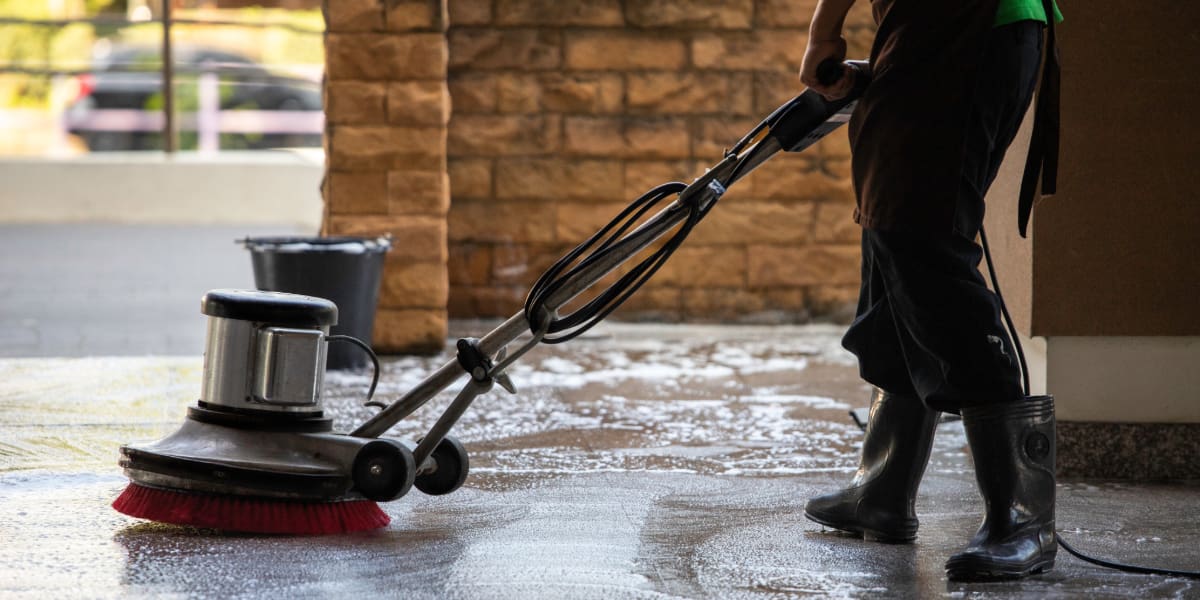
Concrete floors are incredibly durable and low maintenance, but they still need regular cleaning to look their best and last for years. Finding the best cleaner for concrete floors depends on your specific situation. Are you dealing with a garage floor covered in oil stains, a dusty basement, or a polished concrete living space?
Choosing the right cleaner and technique makes all the difference. This guide will help you identify your concrete type, tackle common stains, select the best cleaning solutions, and master the techniques that deliver professional results.
What Type of Concrete Do You Have?
Not all concrete floors are created equal, and neither are their cleaning needs. Before you grab the first bottle you see, consider what you’re working with.
The biggest factor in choosing your cleaner is whether your concrete is sealed. Sealed concrete has a protective coating that repels stains and moisture. This makes it easier to clean with mild solutions. Unsealed concrete is porous and absorbs liquids. It requires more careful treatment to avoid setting stains deeper.
Most garage and basement floors are traditional poured concrete, often left unsealed. Look for patches that appear different—these may be quick-pour concrete used for repairs. Traditional concrete is durable and relatively non-reactive to cleaners. Quick-pour varieties contain additives that may react differently to acidic or alkaline cleaning agents.
Sealed vs. Unsealed Concrete and Other Fancy Flooring Finishes
Decorative elements like dyes, stains, glitter, or stamped patterns enhance concrete’s appearance but don’t add protection. To test if your concrete is sealed, touch the surface. If it feels gritty and rough, it’s likely unsealed. If it’s smooth, glossy, or has a slightly springy feel, a sealer or epoxy has been applied.
Sealed surfaces are much more resistant to stains and damage. This makes them popular in high-traffic commercial settings like mechanic bays, retail spaces, hospitals, and airports. They’re also common in residential garages, workshops, and patios.
Polished concretes can be either sealed or unsealed. Because of their glossy finish, they can be deceptive. To determine if it’s sealed, perform a water test: place a few drops of water on the surface and wait 5-10 minutes.
If the water beads on the surface, your concrete is sealed; if it absorbs and leaves a darker spot, it’s unsealed. When in doubt, reach out to a contractor, flooring specialist, or property manager for confirmation.
Polished concretes can be either sealed or unsealed and because of their glossy finish can be deceptive, requiring specialized polishing techniques to maintain their appearance.
Dealing with Stains on Your Concrete Floors
Some stains can be treated, and some cannot. Instead, they will permanently mar the surface of your floor. For example, grease stains require different treatments than rust stains. However, long-term sunlight exposure may bleach and permanently alter the color.
Start by identifying the nature of the discoloration. If you are unsure of the cause, start with neutral alternatives and work up to more potent options in later attempts. Oily stains often benefit from a pretreatment. Use something absorbent like kitty litter, baking soda, or cornstarch before applying detergents.
Preventing stains before they occur is always easier than treating them, which is why implementing a structured cleaning schedule helps catch spills and issues before they become permanent problems.
Choosing the Best Cleaner for Concrete Floors
Now that you know what type of floor you’re dealing with, and have identified what type of stains you have, now it’s time to select the cleaning agent for the job. Always wear gloves and eye protection when using chemical cleaners and ensure the area is well-ventilated.
pH-Neutral Cleaners
pH-neutral cleaners are ideal for lightly soiled areas and are gentle enough for regular use. Often bearing labels like “pH-Neutral”, “Safe for All Floors”, “Non-Acidic”, or “Gentle Formula”, they are effective for routine cleaning and maintenance. They help to keep concrete floors looking fresh without causing damage, but use caution. Always read the full ingredient list to identify harsh chemicals.
Alkaline (or Basic) Cleaners
Alkaline (or basic) cleaners are effective for breaking down organic stains like grease and oil. They work by raising the pH level of the surface, making it easier to lift dirt and grime. Commonly used in commercial settings, these cleaners are excellent for heavy-duty cleaning tasks. When you need more cleaning power, alkaline cleaners are the go-to. With a high pH, these chemicals excel at cutting through grease, oil, and organic matter. They are commonly used in garages and industrial settings. Just be aware that strong alkaline cleaners can be harsh on sealers, so use them sparingly on sealed surfaces and always rinse thoroughly.
Acidic Cleaners
Acidic cleaners work wonders on mineral deposits, efflorescence (those white, chalky stains), rust, and hard water marks. However, they’re aggressive and can etch unsealed concrete or damage certain sealers if left too long. Use these only when needed, follow the manufacturer’s instructions carefully, and never use them on polished or decorative concrete without checking compatibility first.
Degreasers
Degreasers have been formulated to break down oil and grease. They are essential for garage floors, workshops and driveways where automotive fluids might leave their mark. Water-based degreasers are generally safer for indoor use and for the environment. However, some oils can be hard to remove without solvent-based cleaners. Many times, they have been designed for the exact issue you’re facing—oil, antifreeze and brake fluid spills. They may not interfere with specialty floor sealing products, but check the label and watch the dwell time.
Enzymatic Cleaners
Enzymatic cleaners may be needed for certain problems like mold, mildew and other organic stains. These include blood, bodily fluids, pet urine and fecal matter. These can be incredibly effective when remediating biohazardous spills in doctor’s offices, hospitals, surgical centers and veterinary offices.
A Final Note on All Cleaning Agents
Remember that just because something is “eco-friendly” doesn’t mean it is safe for use in all applications. Detergents using orange, lemon, or vinegar in them may contain higher than normal concentrations of acetic and/or citric acid. These can etch untreated surfaces. Look for certifications or seals from recognized organizations which can indicate adherence to various environmental and safety protocols.
Selecting the Best Mop for Concrete Floors
Choosing the right mop is just as important as selecting the right cleaner. The best mop for concrete floors depends on whether your surface is sealed or unsealed, and the size of the area you’re cleaning.
For sealed concrete, microfiber mops work exceptionally well because they trap dirt effectively and won’t scratch the protective coating. Their absorbency also means you can clean with less water. This is ideal for maintaining sealers.
For unsealed concrete, a traditional string mop or deck mop with natural or synthetic fibers provides the scrubbing action needed to work cleaning solutions into the porous surface. These mops can handle more aggressive cleaning without damage.
For large commercial spaces or outdoor areas, consider a flat mop system with replaceable pads, or a mop designed for use with an extension handle to save your back during extended cleaning sessions. Avoid sponge mops. They tend to push dirty water around rather than absorbing it. They can also deteriorate quickly when exposed to harsh cleaning chemicals.
Step-by-Step Deep Cleaning Process for Concrete Floors
And now for the main event! Here’s how to clean your concrete floor from start to finish.
Prep Step: Pre-Treat Stains
If you have stains that require pre-treatment, especially oil-based or rust stains, consider applying them a day ahead of your deep clean, to allow enough time to activate and absorb the unwanted blemish.
Step 1: Clear the Area
Remove everything from the floor, including furniture, rugs, mats, storage bins, tools, and completely clear out of the space. This isn’t just about convenience. It’s about doing a thorough job and protecting possessions from cleaning solutions and splashes.
Step 2: Sweep and Vacuum
Start with a thorough sweep, then follow up with a shop vacuum or regular vacuum cleaner to capture the fine dust particles that sweeping leaves behind. Don’t skip this step. Loose debris can scratch sealed surfaces when you start scrubbing.
Step 3: Wet Clean the Floor
Mix your chosen cleaner according to the manufacturer’s directions. Apply the solution using a mop, deck brush, or pump sprayer, depending on your space size. Work in manageable 10-by-10 foot sections so the cleaner doesn’t dry before scrubbing. Let it sit for the recommended time—usually 5-10 minutes—to break down dirt.
This is the stage to address stains with your chosen product. For general stain removal, use a stiff-bristled push broom or deck brush in circular motions. Apply steady pressure to work the cleaner into the concrete’s pores. A gentle pressure wash may work for outdoor patios and walkways but isn’t recommended indoors.
Step 4: Rinse the Surface Thoroughly
Do not skip this step. Any cleaner left on the floor will attract dirt like a magnet. It can create a slip hazard, damage surfaces and shorten the life of your investment. Use clean water and a mop to rinse the entire floor, changing your rinse water frequently.
If you’re working outdoors or in a space with a floor drain, a garden hose or pressure washer on a gentle setting makes this job much easier. Keep rinsing until the water runs clear and you don’t see any soap bubbles. For indoor spaces without a drain, you might need to use a wet/dry vacuum to remove the rinse water. Do this between passes with a damp mop.
Step 5: Allow the Floor to Dry
Give your concrete floor plenty of time to dry completely before walking on it or replacing furniture. Depending on ventilation and humidity, this could take anywhere from a few hours to overnight. Speed up the process by opening windows, turning on fans, or using a dehumidifier.
For unsealed concrete, which absorbs more water, you might need to wait up to 24 hours before the surface is truly dry. Once dry, you’ll be able to see if any stubborn stains remain and spot-treat.
For commercial facilities that require continuous maintenance throughout business hours, professional day porter services can handle routine floor care between deep cleaning sessions.
Techniques to Avoid with Concrete Floors
Even with the best intentions, some cleaning methods can do more harm than good.
Spot test harsh chemicals before applying to the entire surface. Never use ammonia, bleach (on colored or stained concrete), or strong acids without first testing them in a hidden corner. Always read the label. Confirm your cleaner is appropriate for your specific type of concrete floor.
Don’t mix cleaning products—this is Cleaning 101 and is just plain dangerous. Mixing ammonia and bleach creates toxic chloramine gas. Combining an acid and an alkaline cleaner neutralizes both, rendering them useless. Stick to one product at a time.
Avoid using scrubbing tools like wire brushes, steel wool, and abrasive pads. These can scratch and damage sealers, especially on polished concrete. Stick with nylon or natural-bristle brushes for sealed surfaces.
Don’t let cleaners dry or remain on the surface. Always rinse thoroughly before the floor dries.
Don’t use too much water on unsealed concrete—it’s porous. It can develop moisture-related issues if you saturate it repeatedly without allowing proper drying time. Use just enough water to clean effectively, but not so much that you’re creating puddles.
Don’t blast concrete with high-powered pressure washing, especially on stamped or textured surfaces. Using too high a PSI (over 3000 PSI for most residential concrete) can pit the surface, remove sealers, or drive water deep into the concrete. This can cause problems. Start with lower pressure and increase only if necessary.
Keep Your Concrete Floors Looking Their Best
Cleaning concrete floors doesn’t have to be complicated. With the best cleaner for concrete floors chosen for your specific situation and the best mop for concrete floors suited to your surface type, you can achieve professional-looking results. A systematic approach makes your space look fresh and well-maintained.
Start with the gentlest cleaning method that will do the job, test products in inconspicuous areas, and never skip the rinsing step. Your concrete floors will reward your care with years of durability and good looks.
Now grab your supplies and get cleaning—you’ve got this!
If you need professional concrete floor cleaning services for your commercial or residential property, Contact AK Building Services today to schedule a consultation and keep your concrete floors looking their absolute best.