
Carpets are everywhere, comprising 50-70% of flooring in commercial and residential settings. They’re a practical choice for high-traffic areas. They’re affordable, durable, and simple to maintain daily, especially with carpet tiles that are easy to replace. Understanding encapsulation carpet cleaning and its alternatives is key to maintaining your investment.
But daily maintenance is just one part of carpet care. Some environments demand near-constant foot traffic management—think airports. Others host occasional high-impact events like formal dinners. Still others are modest spaces with basic needs, such as room-sized floor mats in building entryways.
Regardless of setting, all carpets share the same fundamental daily cleaning routine: pick up larger bits of debris, sweep away visible dust and dirt, and vacuum thoroughly. Deep cleaning, however, is a different challenge altogether.
When it comes to deep cleaning, two primary techniques dominate: encapsulation and extraction. This article will help you decide which carpet cleaning method is right for your use case.
Encapsulation Carpet Cleaning vs. Extraction: Which Method Is Best for Your Business?
When deciding how to deep clean your carpets, start by answering one critical question: What type of carpet do you have? Now isn’t the time to assume you know. Talk to the site or property management, or contact the carpet installers directly. Get an explicit answer.
Making assumptions can have disastrous results. When cleaning dishes, for example, hotter water and longer cycles typically mean better sanitization and germ-free surfaces. You might assume the same logic applies to carpet cleaning, but applying the wrong method can cause serious damage, even if it seems reasonable.
Understanding Carpet Materials and Their Vulnerabilities
Dirty carpets can pack in up to 200,000 bacteria per square inch. Many high end carpets in luxury residences, restaurants, and hotels use wool, and hot water shrinks it. Higher temperatures may kill more bacteria and wipe out bugs and germs, but that same heat can warp, shrink, or curl wool fibers. When you know exactly what your flooring is made of, you protect your investment for the long haul.
Professional cleaning companies bring specialized knowledge about carpet types and appropriate methods, which is why many facilities benefit from hiring a commercial carpet cleaning company rather than attempting complex deep cleaning internally.
What Is Encapsulation Carpet Cleaning? The Low-Moisture Solution
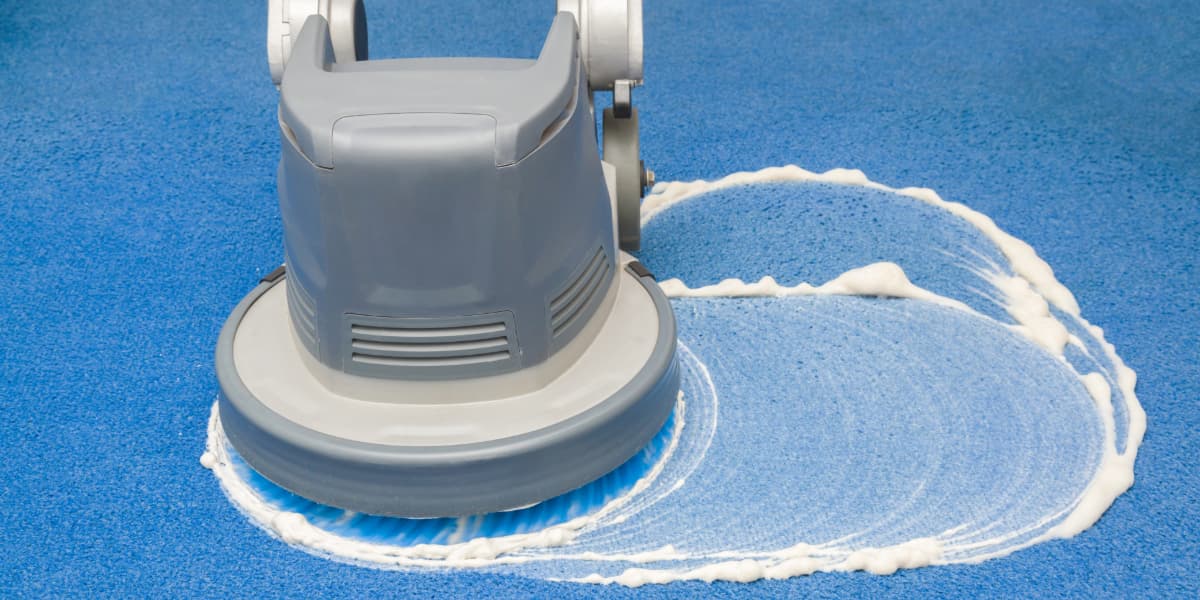
Just like a capsule from the pharmacy surrounds and encases medication for more efficient delivery of cold or flu relief, encapsulation carpet cleaning is designed to wrap dirt in cleaning solution for easy removal using a vacuum.
| Water Needed for Commercial Carpet Cleaning by Technique (per 1,000 square-foot area) | |||
| Method | Water Needed | Moisture Left Behind | Average Dry Time |
| Hot Water Extraction | 30-50 gallons | 1.5 – 10 gallons (high-moisture content & evaporates slowly) | 6-24 hours |
| Encapsulation and Low-Moisture Methods | 3-10 gallons | 3-10 gallons (low-moisture solvents evaporate quickly) | 20-60 minutes |
| Dry Cleaning or Dry Compound Methods | 1-3 gallons | 1-3 gallons (absorbed) | 10-30 minutes |
This low-moisture method relies on polymer-based solvents surrounding unwanted allergens, dust, and dirt. It then traps these contaminants as the solvent dries into tiny crystals.
The solution usually takes between 20-60 minutes to dry. It usually only penetrates the top layers of the carpet. The benefit, of course, is the speedy dry time, which means the area being cleaned will be ready for use again much sooner.
Different Types of Low-Moisture Methods
But there are nuances and not all encapsulation methods are the same. Industry professionals use the umbrella term “low-moisture cleaning” to apply to any method that uses less than 1 gallon of water per 100 square feet (or 10 gallons per 1,000 square feet) of surface to be clean. This is exactly as it sounds: minimal water distinguishes this process from “wet” methods that rely on much higher volumes of water.
The second nuance is “dry cleaning,” which uses absorbent powders or granules brushed into the surface of the carpet with a machine. These are then vacuumed and removed. While technically not completely “dry”, this uses the least moisture of all encapsulation techniques. It uses chemicals that contain little if any actual water.
The final technique is the broadest: “encapsulation.” This applies a polymer solution with a machine and uses substantially less fluid than “wet” methods. It typically relies on some amount of water.
Water Needed for Commercial Carpet Cleaning by Technique
Per 1,000 square-foot area:
Hot Water Extraction
- Water Needed: 30-50 gallons
- Moisture Left Behind: 1.5-10 gallons (high-moisture content, evaporates slowly)
- Average Dry Time: 6-24 hours
Encapsulation and Low-Moisture Methods
- Water Needed: 3-10 gallons
- Moisture Left Behind: 3-10 gallons (low-moisture solvents evaporate quickly)
- Average Dry Time: 20-60 minutes
Dry Cleaning or Dry Compound Methods
- Water Needed: 1-3 gallons
- Moisture Left Behind: 1-3 gallons (absorbed)
- Average Dry Time: 10-30 minutes
Understanding these different cleaning timeframes and dry times is critical when planning facility maintenance, and creating an effective cleaning schedule helps coordinate carpet care with other essential cleaning tasks to minimize disruption to your operations.
Limitations of Encapsulation Methods
Encapsulation’s main downfall, however, is that the solution only penetrates the first ¼” of the carpet surface. This makes it ineffective for deep cleaning. It is also not great on oil-based stains, including motor oils and automotive fluids, fryer grease and many food stains. This includes products used in personal grooming goods like lotions, hair products or massage oils.
Also, when used as the only cleaning tool, encapsulation solvents may build up over time. This changes the way the carpet both looks and feels.
The Deep Clean Standard: Hot Water or Steam Cleaning Extraction
Many local grocery and hardware stores offer machines for home carpet cleaning. Those who’ve rented one know these machines resemble upright vacuum cleaners in appearance. They mix hot water with cleaning solution. The solution is injected under pressure deep into carpet fibers. It then immediately pulls out dissolved dirt and contaminants using suction or extraction.
How Hot Water Extraction Works
The concept is simple: a cleaning solution mixed with detergent is applied under pressure, which loosens the dirt. The detergent dissolves the dirt, and the built-in shop vac sucks out the dirty water. Voilà! Clean carpet.
Most home-use machines can clean about 300-600 square feet per tank fill. They heat water to about 140°F. They use between 40-80 PSI of pressure when dispensing the cleaning fluids. If you’ve done this on a floor in your own home, you know the carpet remains wet for 12-24 hours, sometimes longer in humid climates. These machines are perfect for home use and often perform well.
Commercial-Grade Equipment Requirements
But larger spaces need bigger and better equipment. A grand ballroom at a hotel, for example, typically hosts 800-2,000 guests. It has an area of 12,000-25,000 square feet. Operating a home-use device in such a space would require the tank to be refilled and the wastewater disposed of about 40 times.
Commercial-grade hot water extraction systems are much larger than home units. A portable system with a 5-17-gallon tank can clean up to 3,000 square feet before needing a refill. It also exerts much more pressure during cleaning—usually between 100-300 PSI. The fluid is heated to 150-190°F.
Larger truck-mounted systems are more powerful still. They usually hold 40 to 100 gallons, deliver 300 to 500 PSI of pressure during cleaning, and heat the solution to about 180 to 210°F.-210°F.
Advantages of Commercial Systems
Not only do they require fewer refills, but their suction levels can be three times greater than home-use machines. This provides two additional advantages: more allergens, microbes, and dirt particles are removed during cleaning. Less moisture remains afterward, reducing overall dry time.
Commercial Carpet Cleaning Methods by Flooring Type
Always reference the manufacturer’s recommendations to avoid damage to your carpet that will void the product warranty.
This table includes the most common and readily available commercial carpeting types sold in the USA at the time of writing. It is not intended to be an exhaustive list. If you cannot identify what your carpet is made of or suspect your carpet is made from or contains silk fibers, seek professional guidance before attempting any type of cleaning. Although rarely found in typical commercial settings, silk carpets are extremely expensive. They require exacting techniques to prevent color-loss and fiber damage.
Nylon Carpet
Made from synthetic nylon fibers, nylon carpet is common in corporate offices, conference rooms, and educational settings.
Best Cleaning Method: Hot Water Extraction (using lukewarm water) for deep cleaning or Encapsulation for regular maintenance
Avoid: Bleach and harsh chemicals, even with spot treatments
Olefin
Made from petroleum-based polypropylene fibers that are resistant to stains, Olefin is a budget-friendly choice for moisture-prone areas like basements and outdoor areas.
Best Cleaning Method: Hot Water Extraction for deep cleaning or Encapsulation for regular maintenance
Avoid: Heat treatments and high-temperature cleaning
Triexta
Made from polyester derived from renewable resources like corn sugar, Triexta is highly durable. It has superior stain and soil resistance, making it ideal for offices, residential spaces and schools.
Best Cleaning Method: Hot Water Extraction for deep cleaning or Encapsulation for regular maintenance using mild detergents
Avoid: Heat treatments and high-temperature cleaning
Wool
Made from the fleece of sheep, wool is known for its durability and soft feel. This makes it an ideal choice for high-end hotels, luxury offices and upscale residential settings.
Best Cleaning Method: Dry Compound Cleaning or Low-Moisture Cleaning using wool-safe products
Avoid: Hot water cleaning or extraction and harsh detergents
Carpet Tiles
Made from nylon, polypropylene or a blend of those or other synthetic fibers, carpet tiles are easy to install and repair. They are commonly found in large public institutions, offices, retail environments and education settings.
Best Cleaning Method: Encapsulation Cleaning or Spot Cleaning, as individual tiles are easily removed and replaced in lieu of deeper cleaning
Avoid: High-moisture treatments or high-temperature cleaning that can compromise the adhesive used for installation
Commercial-Grade Carpet
Designed to withstand heavy foot traffic, commercial-grade carpet often has a higher face-weight (the strength of the fibers). It uses a sturdier backing to reinforce the structure, making it an outstanding option for airports, hospitals and large venues.
Best Cleaning Method: Hot Water Extraction for deep cleaning or Encapsulation for regular maintenance
Avoid: Bleach, harsh chemicals and strong solvents that can damage fibers and backing
Different industries face unique carpet cleaning challenges based on traffic patterns and client expectations, as seen in financial institutions where carpet cleaning solutions for banks must balance appearance with minimal disruption to business operations.
Mixing the Methods: The Magic Bullet
In most cases, a hybrid method is the smartest play. Encapsulation carpet cleaning comes first. It has the shortest drying times, returns spaces to service faster, and uses lower temperatures that protect carpet, padding, and installation adhesives.
But when encapsulation can’t break through stubborn grime or residue starts building up, professionals pivot to high-pressure hot water extraction. This is the gold standard for deep dirt removal. The tradeoff? Higher pressure, more water, and elevated temperatures that demand careful handling to avoid damaging carpet, padding, and adhesives.
That’s why the pros don’t choose one method over the other. They choose the right method for the moment. Smart cleaning isn’t about loyalty to a technique. It’s about reading the room (literally) and delivering results that last.
When you understand what is encapsulation carpet cleaning and how it compares to extraction methods, you can make informed decisions about maintaining your commercial flooring. Whether you choose encapsulation carpet cleaning for regular maintenance or combine it with periodic extraction for deep cleaning, the key is matching the method to your specific carpet type and cleaning needs.
Contact Us Today for Professional Carpet Cleaning Services
If you’re interested in professional encapsulation carpet cleaning services for your commercial space, contact the experts at AK Building Services. Our team can help you determine the best cleaning method for your carpet type and maintain your flooring investment.