
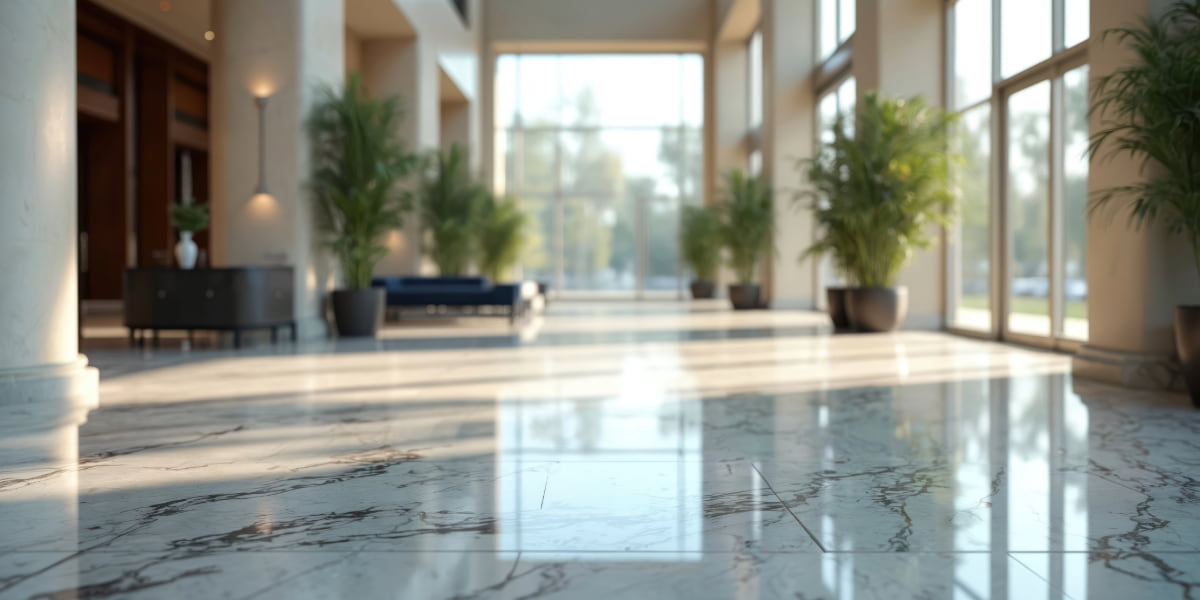
Lobbies serve as the primary face of a commercial business, and their floors endure the heaviest traffic. Understanding how to clean stone floors properly is critical for property owners who invest in natural stone—a material that withstands daily demands while elevating the space.
Natural stone enhances both aesthetics and functionality, improving visitor perception, customer experience, and ultimately, marketability. A well-designed, properly maintained lobby drives foot traffic, tenant satisfaction, and profitability.
While natural stone represents a significant investment, few materials elevate a commercial space more effectively. This article provides a comprehensive guide for commercial cleaners, outlining safe methods, required frequencies, and crucial safety considerations to maintain the integrity and beauty of stone floors.
What Flooring Material Are You Using?
The gleaming Carrara marble lobby was the centerpiece of the $2 million renovation. Installed Friday, each slab was a masterpiece—cool, milky white veined with delicate grey wisps that seemed to move beneath the surface. The natural stone transformed the entry into a space where every footfall felt ceremonial. Building owners and investors were thrilled with the result.
By Monday morning, the property manager discovered dull patches near the entrance. The weekend cleaning crew had used their standard ‘lemon-fresh’ floor cleaner. That citric acid caused $75,000 in restoration work—before a single tenant walked across the pristine surface.
How to Tell if Your Floor Is “Set in Stone”
Testing Your Floor Material
To identify whether your floor is genuine stone or an imitation, try these tests: Natural stone feels cool to the touch and stays cold, while porcelain, ceramic, or vinyl warms quickly. Real stone shows unique, irregular veining and color variations, whereas manufactured materials often repeat patterns.
Check edges and undersides if possible. Stone is consistent throughout, whereas tiles typically reveal a different base layer. On unsealed natural stone, water droplets absorb slowly and darken the surface. Synthetic materials typically repel moisture immediately.
If you’re uncertain, consult a flooring contractor, stone restoration specialist, natural stone supplier, home inspector, or geological testing lab for definitive identification. Many stone restoration companies offer free consultations.
Common Stone Types in Commercial Buildings
Commercial buildings commonly use granite for durability, marble for upscale spaces, travertine for cost-effectiveness, terrazzo for institutions, slate for slip resistance, and limestone for modern environments.
Popular Stone Choices for Residential Spaces
Residential choices include marble for luxury homes, travertine for Mediterranean aesthetics, granite for high-traffic areas, sandstone for warmth, and exotic options like onyx, soapstone, and quartzite for statement floors.
Daily Cleaning: Leave No Stone Unturned
Cleaning natural stone floors demands consistent daily attention to prevent dirt accumulation and surface scratching. Sweep or dust mop your stone floors every day to remove grit, sand, and debris that act like sandpaper under foot-traffic. This gradually dulls the surface. For higher-traffic areas, consider sweeping twice daily—once in the morning and again in the evening.
When spills occur, address them immediately with a soft, damp cloth and pH-neutral stone cleaner. Acidic substances like wine, citrus juice, or vinegar can etch the surface within minutes.
For routine damp mopping, use only cleaners specifically formulated for natural stone, diluted according to manufacturer instructions. Always wring your mop until it’s barely damp rather than soaking wet. Excessive water can seep into grout lines and beneath the stone, potentially causing staining or degradation over time.
Weekly Cleaning: Maintaining Luster and Hygiene
Once per week, perform a more-thorough cleaning to address buildup that daily maintenance misses. Use a pH-neutral stone cleaner with a microfiber mop or soft cloth. Work in sections and rinse frequently to avoid redistributing dirt.
Pay special attention to high-traffic pathways, entryways, and areas around kitchen islands or dining tables where oils and residues accumulate. Clean grout lines with a soft brush and stone-safe grout cleaner. Discolored grout dramatically affects the floor’s overall appearance.
High-traffic lobbies and entrance areas require the same attention to detail as other commercial spaces, and following a comprehensive cleaning checklist for common areas helps maintain consistency across all stone surfaces.
After cleaning, dry the floor completely with clean microfiber cloths or allow it to air dry with good ventilation. Ensure no standing water remains. For homes with pets or children, you may need to increase weekly cleanings to twice per week. Adjust frequency based on actual floor condition rather than adhering rigidly to a schedule.
Deep Cleaning, Buffing, and Polishing: Restoring Brilliance
Professional Deep Cleaning
Professional deep cleaning should occur every six to twelve months, depending on traffic levels and the stone type. Softer stones like marble and limestone benefit from annual professional attention, while harder granite might extend to every eighteen months. Deep cleaning involves specialized equipment and stone-specific solutions that extract embedded dirt from the pores without damaging the surface.
Buffing and Polishing
Buffing to restore shine can be performed quarterly for polished stone floors in commercial settings or high-traffic residential areas. Lower-traffic homes may only require buffing annually. Polishing—a more intensive process that actually refines the stone surface—typically happens every two to three years for residential floors or annually for commercial installations.
Professional floor polishing services use specialized equipment and techniques to restore the natural luster of marble, granite, and other stone surfaces without causing damage.
Between Professional Services
Between professional services, use a stone polish spray monthly on polished surfaces to maintain shine. Buff with a clean microfiber cloth in circular motions. Always reseal your stone flooring according to the sealer-manufacturer’s recommendations, typically every one to three years. This protective barrier is crucial for preventing stains and simplifying daily maintenance.
Stepping Stones to Safety: Keeping your Natural Stone Slip-Free
Understanding Slip Resistance
Natural stone flooring’s inherent beauty shouldn’t come at the cost of safety. Yet its smooth, polished surface can become treacherously slippery when wet or improperly maintained. Understanding slip resistance begins with recognizing that different stone finishes offer varying levels of traction. Honed and textured surfaces provide better grip than high-gloss polished stone. This makes them ideal for entryways, bathrooms, and commercial spaces where moisture is common.
DCOF Ratings and Standards
The Dynamic Coefficient of Friction (DCOF) measures slip-resistance. The Americans with Disabilities Act recommends a minimum DCOF of 0.42 for level surfaces and 0.60 for ramps. When selecting stone flooring, request DCOF ratings and choose appropriately for each area’s intended use.
Treatment Options for Existing Floors
If you already have polished stone in slip-prone areas, consider professional honing or texturing services. These reduce shine while maintaining the stone’s natural elegance. You can also apply anti-slip treatments that increase surface friction without altering appearance.
OSHA Standards and Regulatory Compliance for Commercial Floors
For commercial buildings, OSHA (Occupational Safety and Health Administration) mandates that employers maintain walking and working surfaces free from hazards. These hazards could cause slips, trips, or falls, which account for a significant percentage of workplace injuries. Under OSHA standards, all walking surfaces must be kept clean, dry, and in good repair. Employers are required to correct hazardous conditions immediately or barricade the area until repairs are complete.
Meeting OSHA requirements is just one aspect of maintaining commercial cleaning standards that protect both building occupants and the valuable stone floor investment.
When wet cleaning is necessary during business hours, OSHA requires prominent warning signs placed at all approach points to the wet area. The space should be cleaned in sections to maintain dry pathways. Employers must provide adequate drainage for areas routinely exposed to water. They must also ensure that cleaning products don’t leave slippery residues. This means avoiding wax-based products, over-diluted cleaners, or improper rinsing that leaves film on stone surfaces.
OSHA also mandates that employees receive training on proper cleaning techniques and hazard recognition. Appropriate cleaning equipment and materials must be readily available. Regular inspections should document floor conditions, cleaning schedules, and any slip-and-fall incidents to demonstrate due diligence in maintaining safe premises.
Practical Strategies for Slip Prevention
Immediate Response Measures
Beyond regulatory compliance, practical measures dramatically reduce slip-risks on stone floors. Place walk-off mats with rubber backing at all entrances, extending at least fifteen feet into the building to capture moisture and debris. Address spills immediately with absorbent materials. Keep well-stocked spill response kits accessible throughout your facility. Implement a “wet floor” protocol using visible signage, physical barriers when possible, and designate staff to monitor during inclement weather.
Long-Term Maintenance Solutions
For areas with persistent moisture—pool decks, restaurant kitchens, or entrances—install drainage systems or apply penetrating anti-slip sealers. These enhance traction without compromising appearance. Regular maintenance is critical. Buildup from inappropriate cleaners, deteriorating sealers, or worn textures all decrease slip resistance. Schedule annual professional slip resistance testing in high-liability areas to objectively measure safety performance.
Residential Safety Tips
In homes, use rugs with non-slip backing in bathrooms and kitchens. Ensure adequate lighting and wipe up spills immediately. Proper footwear matters too. Educate building occupants about wearing appropriate shoes, especially in commercial settings where dress codes can influence safety outcomes.
Keep the Ground Under Your Feet with Properly Cleaned Natural Stone Floors
Maintaining the beauty and integrity of natural stone floors in commercial lobbies is both an art and a science. By understanding how to clean stone floors using proper techniques, adhering to regulatory compliance, and prioritizing safety through practical measures, you can preserve this valuable investment for years to come.
From daily grit removal to professional deep cleaning, every step plays a crucial role in protecting the stone’s elegance. This maintains a safe, slip-free environment for visitors and occupants. A well-maintained stone floor not only enhances the aesthetic appeal of your space. It also reinforces the professionalism and attention to detail that define your business.
With the right care, your natural stone floors will continue to serve as a stunning, durable foundation for your commercial lobby. They will leave a lasting impression on all who enter.
If you need professional stone floor cleaning and maintenance services for your commercial property, Contact AK Building Services today to schedule a consultation and keep your natural stone floors looking their best.